

FishingGearUnlimited.com
Fishing - Education - Gear - Strategies - Solutions
“Your Gateway to the World of Fishing.”





Our Website Is About Fishing - We Present Educational Information
with Intelligence from a Wide Network of Experts and
Resources To Help You Accomplish ALL Your Fishing Success!
- LATEST NEWS -
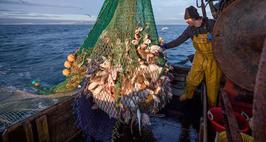
The global fishing industry faces critical ecological and management crises, driven primarily by overfishing, habitat destruction, and illegal practices. According to the United Nations Food and Agriculture Organization (FAO), over one-third of global fish stocks are overfished, a number that has tripled in the last 50 years. This disruption compromises ocean biodiversity, alters marine food webs, and threatens global food security for billions of people. This is according to a story by the NOAA Office of National Marine Sanctuaries.
Here is a breakdown of the most urgent issues impacting our oceans and waterways:
Major Ecological Issues
Overfishing means that catching fish faster than they can reproduce completely depletes breeding populations. This creates an ecosystem imbalance where top predators starve and smaller species overpopulate. This is according to an article by Open Farm.
Bycatch is another issue that needs to be addressed. This involves the unintentional capture of non-target marine life—such as sea turtles, dolphins, sharks, and seabirds—in commercial nets and lines. Millions of these animals die or are severely injured annually before being discarded. This is being reported by the Association of American Geographers.
Ghost Gear is another issue where abandoned, lost, or discarded commercial fishing gear remains in the water for decades. This "ghost gear" matter continuously ensnares marine wildlife and acts as the largest single source of plastic pollution in the oceans today. That is a matter reported by the Human League.
Habitat Destruction is also another issue that needs a better solution. This is about heavy commercial practices like bottom trawling, which drags massive nets along the seafloor, obliterating fragile coral reefs and sponge ecosystems that act as essential nurseries for marine life. This comes from the Marine Conservation Institute in a report called; "Seven of the Biggest Problems Facing Fish in our Oceans."
Management & Regulatory Challenges
IUU Fishing many times results in Illegal, unreported, and unregulated fishing that accounts for up to $23.5 billion worth of stolen fish annually. These operations completely bypass quotas, fish in protected waters, and undermine law-abiding markets. This is from a report by the PEW Charitable Trusts and other reports by the NOAA Fisheries.gov..
Harmful Subsidies by many governments are also a devastating result because they spend billions of dollars subsidizing fuel and large-scale vessels. This issue encourages commercial fleets to continue fishing in overexploited areas where operations would otherwise be unprofitable. This is from a report by Earth.org and World Wildlife Fund, (WWF) as well as the Smithsonian Ocean Portal.
Human Rights Violations also are creating an issue because IUU fishing takes place in isolated, weakly regulated waters, which is heavily linked to severe human trafficking, forced labor, and modern slavery at sea. This is from reports by Earth.org, World Wide Fund, (WWF), and the Smithsonian Ocean Portal.
Environmental Stresses
In dealing with the issue of Climate Change, warming ocean temperatures have forced traditional fish stocks to alter their migratory routes. Additionally, heat stress has triggered massive coral bleaching, stripping fish of their primary habitats. This comes from a report from the Marine Conservation Institute, previously presented here and by the Marine Stewardship Council.
Dealing with Aquaculture Diseases, poorly run and managed fish farms house dense populations that act as breeding grounds for parasites (like sea lice) and diseases, which routinely escape into wild populations, thus endangering them without warning. This comes from a report at the Human League, a coalition of global force combining rigorous science and laser like focus for animals.
To explore these issues further on many fronts, you can monitor global conservation efforts through the World Wildlife Fund (WWF), Google Marine Programs or review sustainable standard updates via the Marine Stewardship Council (MSC).
These fishing issues can also be researched across an even wider spectrum via many commercial, environmental and recreational angling perspectives. It is certainly worth investigating further specific data for many local and regional solutions.
Overfishing Crisis
The current overfishing crisis represents an unprecedented threat to global marine ecosystems and human food security, with 35.5% of monitored global fish stocks now classified as overfished, according to the latest figures from the UN Food and Agriculture Organization (FAO). Over the past half-century, the number of overfished stocks has tripled, fueled by skyrocketing consumer demand, industrial fishing capacities, and widespread regulatory failures. Without drastic management intervention, the cascading environmental and socio-economic consequences threaten to collapse foundational wild marine habitats according to the World Wildlife Fund.
The Primary Drivers of Current Overfishing
involve the destructive industrial fleet capacities. Global commercial fishing fleets operate at roughly 2.5 times the sustainable capacity needed for current fish populations. Technologies like bottom trawling sweep massive swaths of the seabed, indiscriminately destroying essential benthic habitats and wiping out whole communities according to the Marine Conservation Institute..
Harmful government subsidies continue to contribute to approximately $22 billion in harmful government subsidies annually. It funds industrial operations that would otherwise be unprofitable. Fuel and gear subsidies disproportionately empower massive deep-sea trawlers, creating artificial financial incentives to exploit already depleted waters. Thats according to National Geographic.
IUU fishing and regulatory vacuums are Illegal, with most of them remaining unreported, and unregulated. IUU fishing plagues remain unregulated in large regions of the high seas, such as the southwest Atlantic and northwest Indian Oceans. For instance, a major investigation exposed massive, unmonitored industrial squid fleets plundering juvenile marine life with total impunity. This comes from the Smithsonian Ocean Portal.
Devastating Ecological Impacts
Bycatch and Biodiversity Loss is done many times by industrial nets which catch billions of unwanted sea animals each year, known as bycatch. Hundreds of thousands of endangered sharks, sea turtles, and cetaceans are needlessly killed or injured, disrupting critical ecological balances once again reported from the World Wildlife Fund.
As a result of trophic cascades, countless industrial fleets have eradicated nearly 90% of large predatory fish like tuna, sharks, and cod. The removal of top predators triggers a domino effect, leading to the overpopulation of smaller species and the eventual degradation of coral reefs and kelp forests. That intelligence comes from the Association of American Geographers.
Overfishing results in climate change vulnerability and actively reduces "blue carbon" storage capacity by extracting massive biological biomass from the ocean, while at the same time commercial fleets simultaneously emit millions of tons of carbon dioxide from heavy fuel consumption.according to the United Nations Climate Change Secretariat.
Socio-Economic Risks
With the current global food crises, seafood provides critical protein and micronutrients to more than 3 billion people around the globe. Severe stock depletion directly triggers food insecurity, rising prices, and deep social instability across vulnerable coastal communities. This is according to NPR.
Economic Collapse: Over 60 million people globally rely on primary fisheries and aquaculture for their livelihoods. Collapsing fisheries threaten to wipe out billions of dollars in international trade and eradicate coastal economies, particularly along the coast of Southeast Asia and West Africa. This is also another report from NPR.
Current Global Solutions & Progress
Regional disparities in fisheries management highlight that recovery is possible. While areas like the Northeast Pacific and Australia maintain highly sustainable stocks through science-based limits, underfunded regions like the Mediterranean and West Africa face severe depletion. To counteract this, nations are turning to strict binding agreements. The World Trade Organization (WTO) legal framework prohibits harmful government support for illegal fishing operations. Organizations like the Natural Resources Defense Council (NRDC) push for strict, science-backed catch limits and climate-ready management to allow overfished marine populations the opportunity to safely rebuild.
These specific aspects certainly focus on harmful fishing methods, vulnerable regional hotspots, or how consumer certification choices help protect marine ecosystems.



Our Blog
"Explore Fishing. Discover Opportunities. Protect Our Waters"
FishingGearUnlimited.com
Proprietary Reports
1. State of the American Angler Report
2. Fishing Gear Buying Trends Report
3. Saltwater Fishing Trends Report
4. Freshwater Fishing Trends Report
5. Fishing Electronics Report
6. Fishing Tackle Market Report
7. Fishing Apparel Report
8. Fishing Boat & Kayak Report
9. Fishing Travel Report
10. Fishing Technology Report
Industry Reports
11. Fishing Industry Outlook
12. Fishing Retailer Report
13. Fishing Supplier Report
14. Fishing Manufacturer Report
15. Fishing E-Commerce Report
16. Fishing Affiliate Marketing Report
17. Fishing Tournament Industry Report
18. Fishing Charter Industry Report
19. Fishing Tourism Report
20. Fishing Conservation Report
FishingGearUnlimited.com
eBook Library
• The Ultimate Saltwater Fishing Guide
• The Ultimate Freshwater Fishing Guide
• The Beginner's Guide to Fishing
• 100 Fishing Knots
• 100 Best Fishing Lures
• The Complete Bass Fishing Guide
• The Complete Redfish Guide
• The Complete Snook Guide
• The Complete Tarpon Guide
• The Complete Offshore Fishing Guide
• Fishing Gear Buyer's Guide
• Fish Finder Buyer's Guide
• Fishing Rod Buyer's Guide
• Fishing Reel Buyer's Guide
• Fishing Kayak Buyer's Guide